UK's £120 Million Gambling Levy Delivers First Prevention Grants Through OHID Amid Sector Upheaval

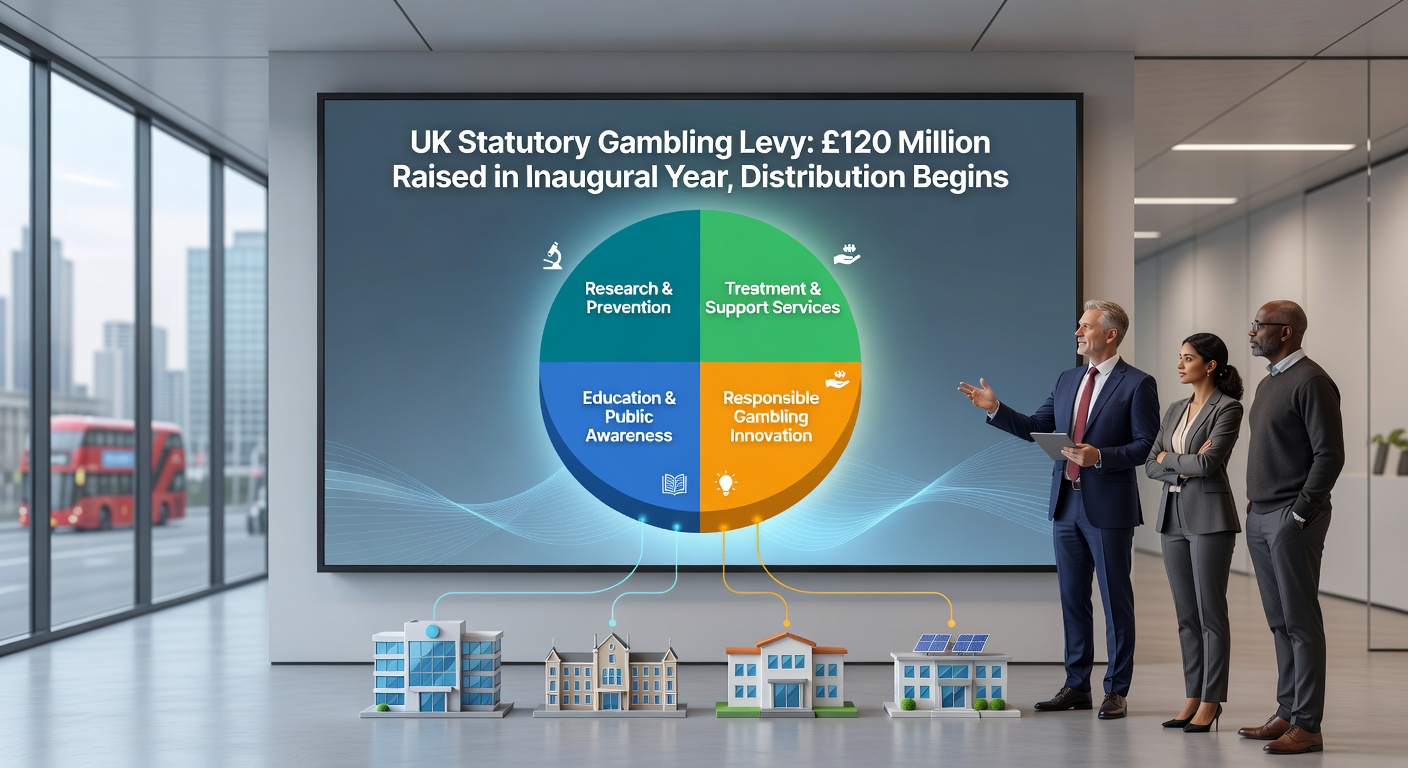
The UK's statutory gambling levy has reached a key milestone, raising £120 million during its inaugural year before channeling those funds into the first wave of prevention grants via the Office for Health Improvement and Disparities (OHID); this shift marks the end of the previous Gambleaware charity funding model, effective March 31, 2026, while the new grants kick off from April 1, 2026, targeting organizations focused on harm prevention like Betblocker.
Origins and Rollout of the Statutory Levy
Operators began receiving invoices for the statutory gambling levy on September 1, 2025, setting the stage for this structured funding mechanism designed to support gambling harm prevention on a national scale; by the close of its first full year, the levy had generated £120 million, a figure that underscores the scale of contributions from the industry even as it navigates the transition to this mandatory system. What's interesting here is how quickly the funds materialized, reflecting the levy's broad base which pulls from various gambling sectors, and although details on exact breakdowns remain under wraps for now, the total haul positions it as a significant pot for public health initiatives.
Experts tracking the levy note that this approach replaces voluntary contributions previously managed through Gambleaware, an organization long at the helm of prevention efforts, but with the charity model's sunset on March 31, 2026, OHID steps in as the distributor, aiming for a more direct tie to government health priorities; the timeline, tight as it was, aligned invoicing with the fiscal shift, ensuring continuity even if the handover stirred ripples across the sector. And so, as April 1, 2026, dawned, the first grants flowed to vetted groups, Betblocker among them, which specializes in tools that help users block access to gambling sites, a practical frontline defense in harm reduction.
Those who've followed gambling regulation in the UK point out that the levy's structure, baked into law through recent reforms, mandates contributions based on operator revenues and activities, making it far more predictable than the patchwork of voluntary pledges that came before; data from the inaugural year confirms the £120 million target hit the mark, fueling expectations for sustained funding as the levy embeds itself deeper into the industry's operations.
The First Grants: Who Gets Funded and Why
OHID's role in doling out these initial grants highlights a pivot toward evidence-based prevention, with Betblocker securing support for its app-based blocking technology that users activate to curb impulsive gambling sessions; effective from April 1, 2026, this distribution replaces the Gambleaware pipeline entirely, channeling levy proceeds directly to organizations whose missions align with reducing harms at the individual and community levels. Turns out, the selection process prioritized entities demonstrating measurable impact, although specifics on grant sizes or full recipient lists haven't surfaced yet, leaving observers to parse the broader implications.
But here's the thing: the transition wasn't seamless, as the sector grapples with how these funds reshape ongoing programs; Gambleaware, after years of steering voluntary donations toward research, treatment, and education, bowed out precisely as OHID ramped up, creating a brief overlap that some hoped would smooth the edges, yet the March 31 cutoff loomed large. People in prevention circles have observed that tools like Betblocker's self-exclusion features gain traction precisely because they're user-initiated and tech-forward, fitting neatly into OHID's public health framework which emphasizes accessible interventions over broader awareness campaigns.
Now, with the levy invoicing cycle established since September 2025, future years promise similar hauls, potentially scaling up grants as revenues grow; researchers who've analyzed similar levies elsewhere, like in Australia, suggest that statutory models boost accountability, ensuring dollars tie back to health outcomes rather than diffuse efforts, and the UK's version, by funneling through OHID, integrates gambling harms into wider disparities work, from addiction treatment to socioeconomic supports.
Sector Turmoil: Short Notice and Notable Exclusions
The rollout, for all its promise, has ignited turmoil within the prevention ecosystem, primarily over razor-thin notice periods that left some groups scrambling to adapt; criticisms have mounted around the abrupt end to Gambleaware funding, with organizations facing uncertainty just months ahead of the April 1, 2026, switchover, and while OHID moves forward with its selections, voices from the front lines decry the lack of buffer time to pivot programs or secure interim backing. It's noteworthy that this friction stems not from the levy's yield—£120 million speaks for itself—but from the mechanics of transition, where long-standing partnerships dissolved overnight.
Take the case of Gamban, an app provider offering similar blocking services, yet denied a grant due to its business model which blends freemium access with premium subscriptions; observers note this exclusion highlights OHID's criteria favoring fully public-funded tools, sidelining hybrid operations even if they've proven effective in curbing access for thousands, and the decision, while consistent with grant guidelines, has fueled debates on whether pure charity models stifle innovation in a field hungry for scalable tech solutions. That said, Betblocker's inclusion contrasts sharply, as its no-cost model aligns seamlessly with OHID's mandate, underscoring the fine line between funded and overlooked.
And yet, amid the uproar, some sector players see silver linings; the levy's mandatory nature guarantees flows year after year, unlike the voluntary dips that Gambleaware weathered, and although short notice pinched, the £120 million war chest offers a lifeline larger than predecessors, potentially stabilizing worthy causes once the dust settles. Experts who've studied funding shifts in public health warn that such transitions often breed initial chaos but yield stronger systems long-term, with OHID's oversight adding a layer of governmental rigor to prevention dollars.
Key Timeline Breakdown
- September 1, 2025: Levy invoicing commences for operators.
- Inaugural year closes with £120 million raised.
- March 31, 2026: Gambleaware funding model terminates.
- April 1, 2026: OHID prevention grants activate, Betblocker among recipients.
This sequence, compressed as it feels, reflects the urgency behind statutory reform, aiming to lock in prevention before harms escalate further in an industry expanding via online platforms and mobile apps.
Broader Context and Ongoing Developments
Figures from the levy's first year reveal a robust start, with £120 million surpassing some pre-launch projections and positioning the UK as a leader in ringfenced gambling funds; according to reports, the distribution through OHID ensures alignment with National Health Service priorities, blending gambling prevention into holistic health strategies that address vulnerabilities head-on. What's significant is how this model responds to rising concerns over online gambling's reach, where tools like Betblocker's blockers prove vital against 24/7 access, and although Gamban's snub stings, it signals a preference for uncompromised public tools over commercial hybrids.
Those monitoring the sector have spotted patterns from past reforms, where initial pushback gives way to adaptation; organizations like Betblocker, now bolstered, expand outreach, while others pivot to alternative funding or partnerships, and the levy's momentum, tied to industry growth, hints at escalating totals ahead, potentially hitting higher marks as betting volumes climb. So, even with the turmoil, the framework solidifies a path from operator contributions straight to harm mitigation, a direct line that's eluded voluntary systems for years.
One study of comparable initiatives (though not UK-specific) found that statutory levies increase prevention spending by up to 30% over time, a trend that could amplify here as OHID refines its grant processes; critics, meanwhile, urge longer lead times for future tweaks, ensuring no group falls through cracks like Gamban, whose model, freemium as it is, has shielded users effectively despite the rejection.
Conclusion
The statutory gambling levy's £120 million debut ushers in a new era for UK harm prevention, with OHID's first grants from April 1, 2026, empowering outfits like Betblocker while phasing out Gambleaware's reign by March 31; sector turmoil over timelines and exclusions like Gamban underscores the growing pains, yet the funds' scale and structure promise enduring impact. As invoicing rolls on from its September 2025 start, observers anticipate refinements that balance speed wth inclusivity, keeping prevention at the forefront of gambling's regulated landscape. The ball's now in OHID's court to deploy these resources effectively, turning levy proceeds into tangible shields against harm.
Source details on the levy rollout and reactions capture the pulse of this pivotal shift, where £120 million meets real-world application head-on.