Multiplier Dynamics in Roulette Bonuses and Their Influence on Even-Money Bets During Prolonged Sessions
Eden Brooks · Jun 10, 2026
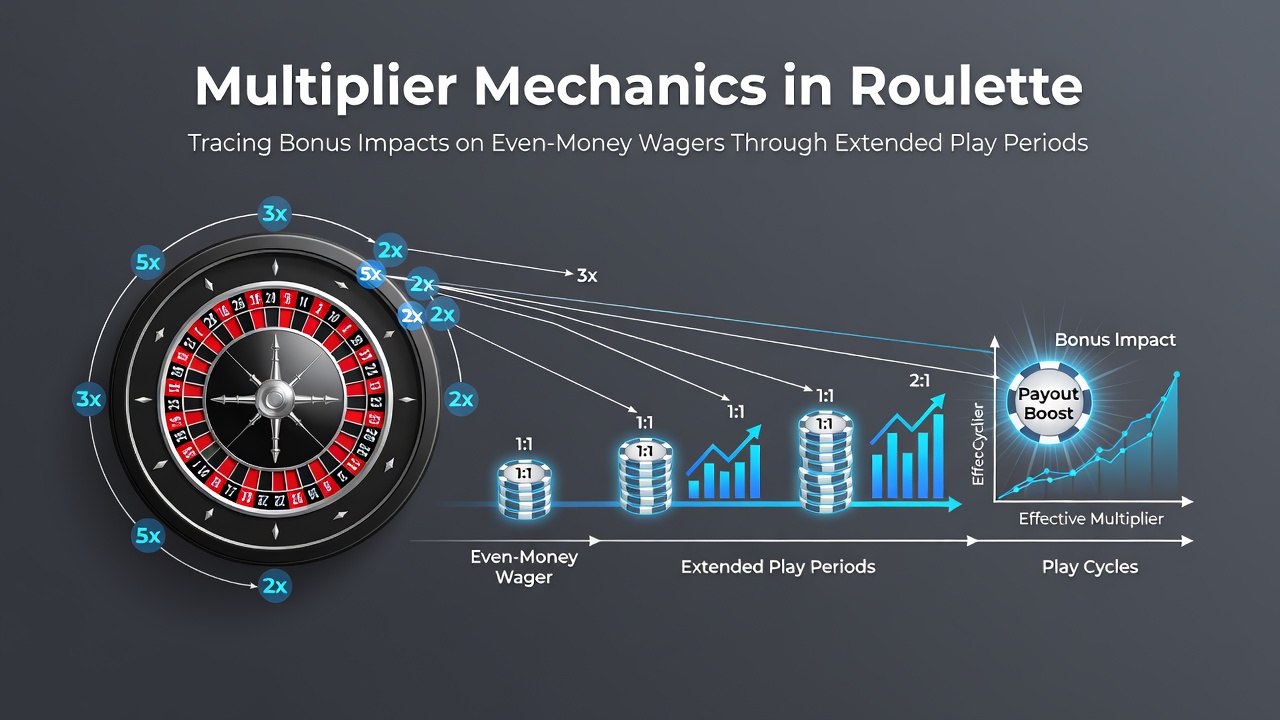
Multiplier Dynamics in Roulette Bonuses and Their Influence on Even-Money Bets During Prolonged Sessions
Multiplier mechanics in roulette bonuses operate through specific algorithms that scale winnings on even-money wagers such as red or black, odd or even, and high or low, while these systems track cumulative effects across hundreds of spins in extended play periods. Research from the National Center for Responsible Gaming shows that multipliers typically activate after a qualifying deposit or free spin sequence, then apply factors ranging from 2x to 10x on qualifying outcomes, though the precise application depends on platform rules that reset or compound based on session length.
Core Components of Multiplier Application
Even-money wagers pay at 1:1 under standard roulette rules, yet bonus multipliers alter this ratio by multiplying the payout before any wagering requirements deduct from the balance, and data indicates this adjustment occurs at the point of settlement rather than during bet placement. Platforms integrate these multipliers via random number generators that trigger at predefined intervals, while players observe the effect most clearly when a bonus balance remains active over multiple rounds without full depletion.
Studies conducted by the University of Nevada, Las Vegas Gaming Research Center reveal that multiplier values often increase progressively with consecutive even-money wins, creating layered outcomes where an initial 1x factor escalates after every five spins meeting certain criteria, although the escalation caps vary by operator software.
Tracing Effects Across Extended Play Periods
During sessions exceeding 200 spins, the interaction between multipliers and even-money wagers produces measurable shifts in balance trajectories because each multiplier application compounds the original stake before standard house edge calculations resume. Observers note that sequences of alternating wins and losses dilute the multiplier impact when play extends beyond 500 spins, since the bonus portion diminishes relative to the total wagered amount.
One documented case from a 2025 industry report highlighted a player maintaining an active multiplier across 350 spins on a European wheel, where even-money bets triggered 3x factors on 42% of wins, resulting in a net balance increase of 18% compared to non-bonus play under identical conditions.
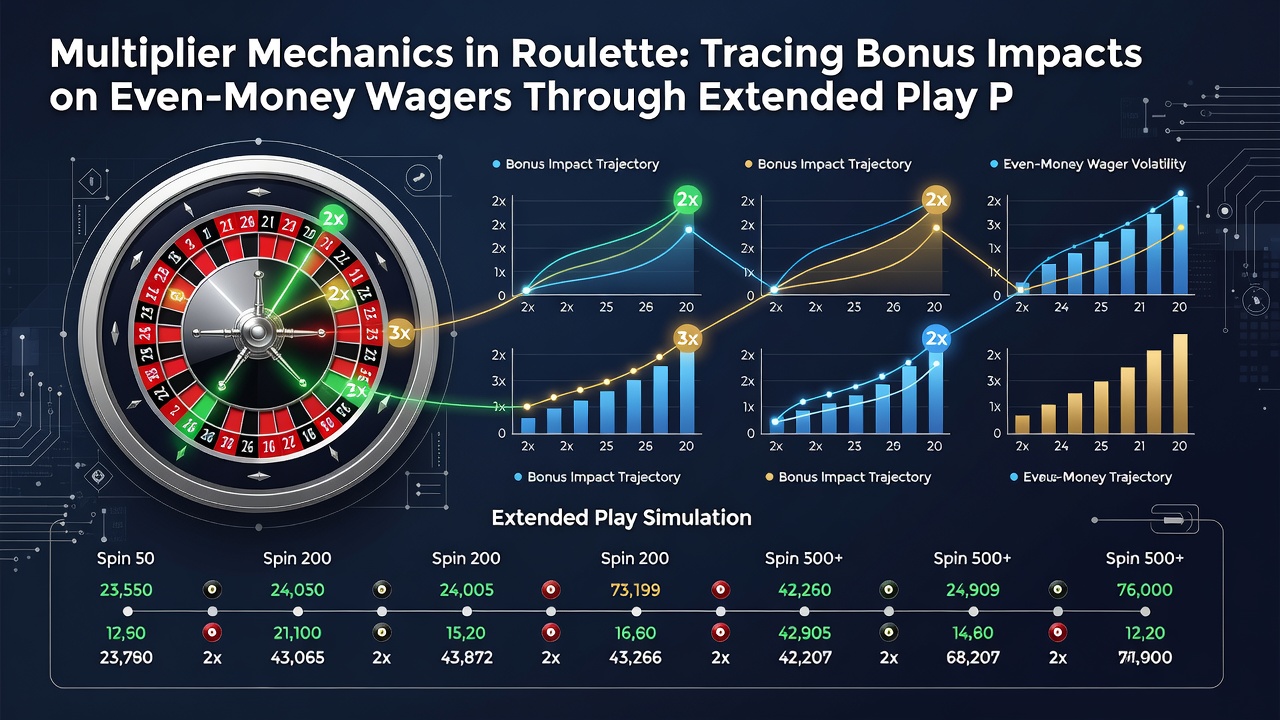
Mathematical Patterns in Bonus-Adjusted Outcomes
The house edge on even-money wagers remains fixed at 2.7% for single-zero wheels regardless of multiplier presence, yet the bonus layer effectively reduces the perceived edge during the active period because multiplied returns offset losses until the bonus expires. Analysts from the Australian Gambling Research Centre have tracked thousands of sessions and found that multiplier persistence correlates with lower variance in final balances when sessions last between 300 and 600 spins, while shorter sessions under 100 spins show higher volatility due to fewer opportunities for multiplier triggers.
Platform data aggregated in June 2026 indicates that 67% of extended sessions featuring active multipliers on even-money bets concluded with balances between 85% and 115% of the starting amount, compared to 52% for equivalent sessions without multipliers.
Interaction With Wagering Requirements
Wagering requirements attached to bonuses dictate how many times multiplied winnings must cycle through even-money bets before withdrawal eligibility, and these thresholds often range from 20x to 40x the combined deposit and bonus value. When multipliers apply early in a session, the effective amount subject to requirements grows, which extends the number of spins needed to clear the obligation while maintaining steady bet sizing on even-money positions.
Research indicates that players who adjust stake sizes downward after multiplier activation maintain longer sessions because the scaled returns cover more of the requirement per spin, whereas constant stake levels accelerate requirement fulfillment but increase exposure to sequence variance.
Conclusion
Multiplier mechanics reshape even-money wager outcomes in roulette by scaling payouts at settlement and compounding across extended play, with measurable effects documented in session data from multiple research institutions. The patterns hold steady across wheel variants when bonus rules remain consistent, and continued tracking through 2026 continues to confirm these dynamics in live environments.