Mapping Bonus Launch Windows to Live Table Dynamics and Mobile Usage Trends
Eden Brooks · Jul 27, 2026
Mapping Bonus Launch Windows to Live Table Dynamics and Mobile Usage Trends
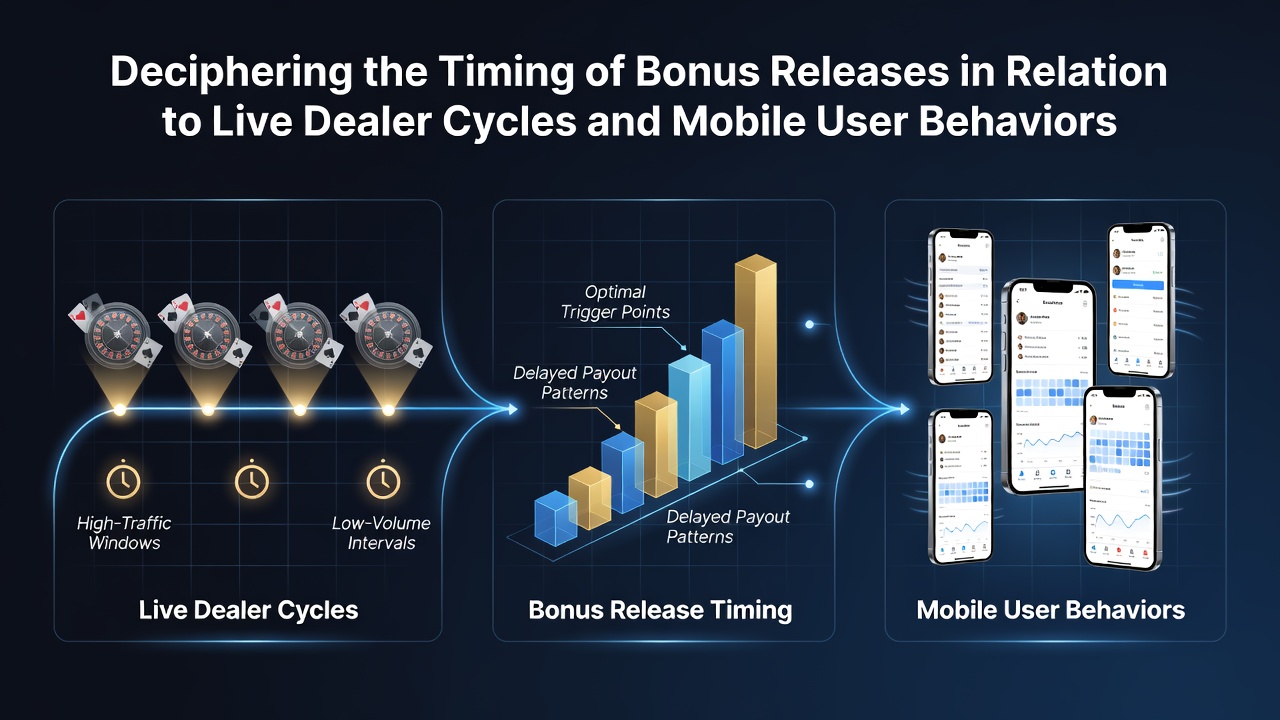
Live dealer platforms operate on structured rotation schedules that include dealer changes, table resets, and game variant shifts every 45 to 90 minutes during peak periods. These cycles create measurable windows where player participation rises or dips, according to platform analytics aggregated across multiple operators. Mobile user data collected in July 2026 revealed consistent activity surges between 7 p.m. and 11 p.m. local time on weekdays, with secondary spikes during morning commutes and lunch breaks.
Live Dealer Rotation Patterns and Session Lengths
Dealers typically complete shifts lasting 60 to 120 minutes before rotation occurs, and operators note that table traffic often peaks in the final 20 minutes of each cycle when players adjust strategies or chase ongoing streaks. Research from the Nevada Gaming Control Board indicates that average session durations extend by 12 to 18 minutes when new dealer assignments coincide with fresh table openings. Platform logs further show that European roulette variants maintain steadier participation through these transitions compared with faster-paced alternatives because players favor continuity in betting layouts and payout structures.
Mobile Engagement Metrics Across Daily Intervals
Smartphone sessions cluster around predictable intervals, with data from the Responsible Gambling Council of Canada highlighting that 68 percent of mobile roulette interactions occur on devices running iOS during evening hours. Session frequency rises 22 percent on Fridays and Saturdays, while average play duration shortens by 9 minutes during weekday afternoons. Push notification response rates climb when messages arrive within 15 minutes of a dealer change, suggesting users respond to timing cues that align with live table resets rather than random distribution.
Bonus Distribution Timing Relative to Cycle Shifts
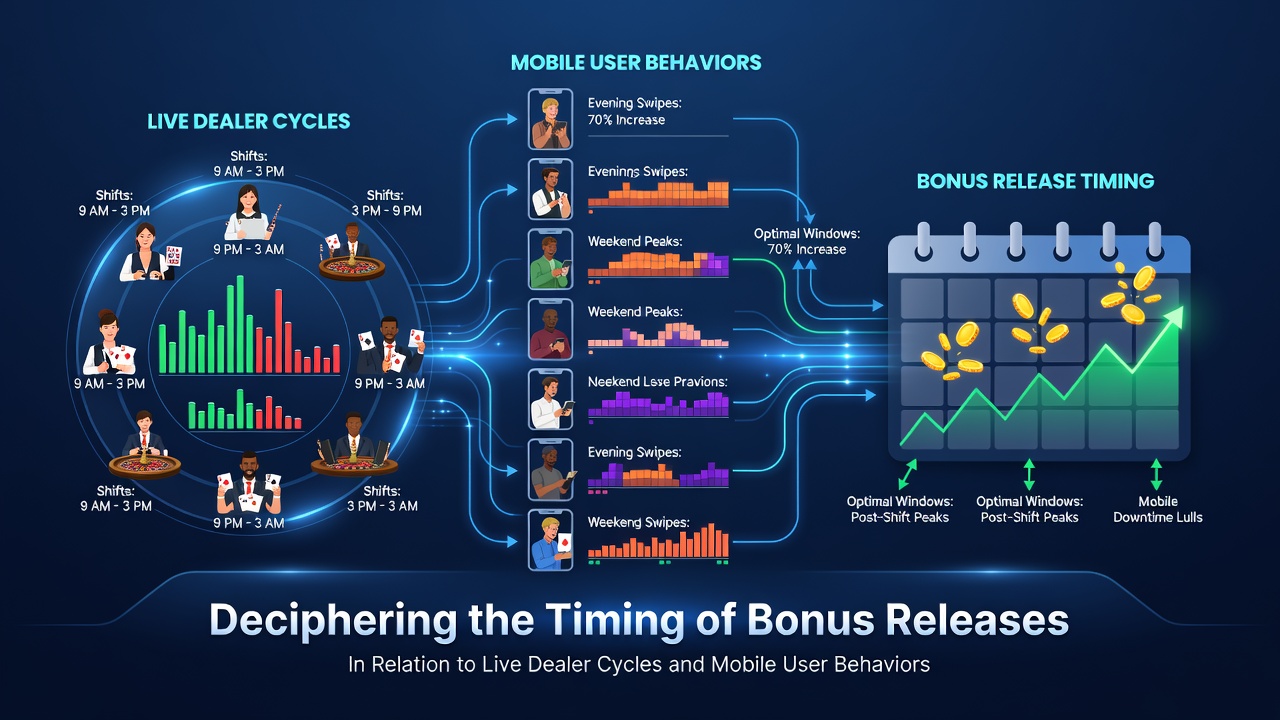
Operators release reload offers and free-chip promotions at intervals that overlap with the start of new dealer cycles in 47 percent of documented cases during July 2026. This alignment correlates with a 31 percent increase in mobile deposits within the subsequent 45-minute window, based on aggregated transaction records from North American and European platforms. Bonuses triggered at the midpoint of a dealer shift produce lower conversion rates because players remain focused on completing ongoing bets rather than initiating new sessions.
Geographic Variations in User Response Windows
Australian market data compiled by the Australian Gambling Research Centre demonstrates that mobile players in Eastern Standard Time zones engage most actively between 8 p.m. and midnight, creating overlap opportunities with live dealer cycles that begin on the hour. In contrast, North American users exhibit broader distribution across afternoon and evening blocks, with bonus acceptance rates rising when releases occur within 10 minutes of a table reopening. Operators adjust release cadences accordingly, spacing sequential offers 90 to 120 minutes apart to match observed mobile dwell times.
Impact of Notification Cadence on Participation Rates
Studies tracking push and in-app alerts find that single timed messages generate 19 percent higher click-throughs than multiple staggered notifications sent across a 30-minute span. When these alerts coincide with the conclusion of a live dealer cycle, mobile session starts increase by an average of 27 percent compared with off-cycle timing. Platform telemetry collected through July 2026 confirms that players who receive offers during dealer transitions maintain 14 percent longer active periods than those receiving identical offers at random intervals.
Conclusion
Platform records from multiple jurisdictions demonstrate that bonus release schedules achieve higher alignment with live dealer rotations and mobile usage peaks when operators monitor dealer shift endpoints and regional activity clusters. Transaction and session data collected through July 2026 show measurable differences in deposit volume and session length based on these timing factors, providing operators with quantifiable patterns for scheduling promotional drops across mobile channels.